
Lush forests, winding roads, gurgling streams, colourful prayer flags and above all, wonderful people. Known for being carbon negative and its Gross Happiness Index, Bhutan is the country to be in if you want to get close to nature.
A perfect destination for a trip with family or a couple trip, here’s your guide to planning your trip to Bhutan. We went as a group of 4 friends.
- 🗓️ High level itinerary
- 💰Budget
- ✈️ Flights
- 📃Visa
- 💵Forex
- 📝 Detailed Itinerary
🗓️ High level itinerary
If you would want to cover Bhutan extensively (including the Phobjika Valley), 10 days is the ideal time. However, we were there for 6 days since we decided to skip this. The best time to visit is during spring (March to May), however, if you want to avoid crowds and experience some bone-chilling cold, winter is not a bad time either.
- Thimphu – Buddha Dordenma, Royal Takin preserve, Simply Bhutan (for some Bhutanese food), clock tower area
- Punakha – Dochu La, Punakha fort (day and night view), Punakha suspension bridge
- Paro – Airport view point, Tigers’ nest trek, Paro Dzong
💰Budget
| Details | Per person | Comments |
| Flights to and from Bangalore | INR 16,000 | |
| Internal travel | INR 12,000 | SUV/ minivan with driver and guide |
| Accommodation | INR 18,000 | INR 3,000 per night per person (3-star grade accommodations) |
| Food | INR 8,000 | |
| Sustainable development fee | INR 7,000 | INR 1,200 per day for Indians and $ 200 for other tourists |
| Miscellaneous | INR 5,000 | Hot stone bath, entry tickets to various places |
| Total | INR 66,000 | Per person |
✈️ Flights
There are very limited flights that operate directly between Paro and cities in India and they are very expensive. So the best way is to fly in and out of Bagdogra, West Bengal and cover the rest of the journey by road. Indigo generally offers the best prices
🧳 AK’s Travel Tidbits 🧳
- While the most cost-efficient way is to drive from Bagdogra, the journey can be quite long and tiring. So if you’d rather avoid the journey and use that time to spend more time in Bhutan, you could book a flight to Paro directly
- Druk Air and Bhutan airlines are the only ones allowed to fly into the country and no other operator is allowed since the runway is quite small and needs highly skilled pilots to navigate it
- Do ensure to check the baggage specifications of each of these operators
📃Visa
Indians do not need a visa to enter Bhutan. If you enter by road, you will be required to complete your immigration at the border gate in Phuentsholing. Just carry any ID proof – voter ID, Aadhar card or passport (if you want a stamp 😋)
We were greeted by our tour guide Jamtzso at the gate who helped us complete our immigration formalities. The immigration officer asked a few basic questions on purpose of our visit and approved it. Travel insurance is a must and is thoroughly checked at the time of the immigration process
🧳 AK’s Travel Tidbits 🧳
- For non-Indians, the visa is processed through an online system by a Bhutanese licensed tour operator
- The list of licensed tour operators is provided here. Your entire trip will also be required to be booked through one of the licensed tour operators only since you will need to be accompanied by a guide and driver whenever you’re visiting any monument. Plus, tourists are not allowed to drive around in Bhutan
💵Forex
The local currency is Bhutanse Ngultrum (Nu). However, Indian currency is also widely accepted in the country (1 Nu = 1 INR). While UPI payment gateways are active in the country, it is not enabled for non-Bhutanese banks. So cash (and in some restaurants, cards) is the only mode of payment available for tourists. We carried cash of around INR 20,000 per person
For non-Indians, there are currency exchange kiosks at the Paro airport and several local shops where one can exchange currency. One could also withdraw cash from local ATMs or at bank branches in the larger cities of Paro and Thimphu
📝 Detailed Itinerary
Day 1: Bangalore to Bagdogra and travel to Thimphu
- We reached Bagdogra at around 8 AM in the morning, grabbed some quick breakfast and started our drive to the border town of Jaigaon. On the way, made a quick pitstop for some tea since this region is known for its tea and is quite close to the tea heaven of Darjeeling. The drive takes about 4-5 hours since there are some towns where one would encounter some traffic
- Reached Jaigaon at around in the afternoon and entered the immigration office at the border gate by walk since Indian vehicles are not allowed beyond the border gate. The border town on the other side is named Phuentsholing. Post completion of the immigration formalities, we were given a very warm welcome by our tour guide and driver and we started our journey by road to the capital city of Bhutan – Thimphu.
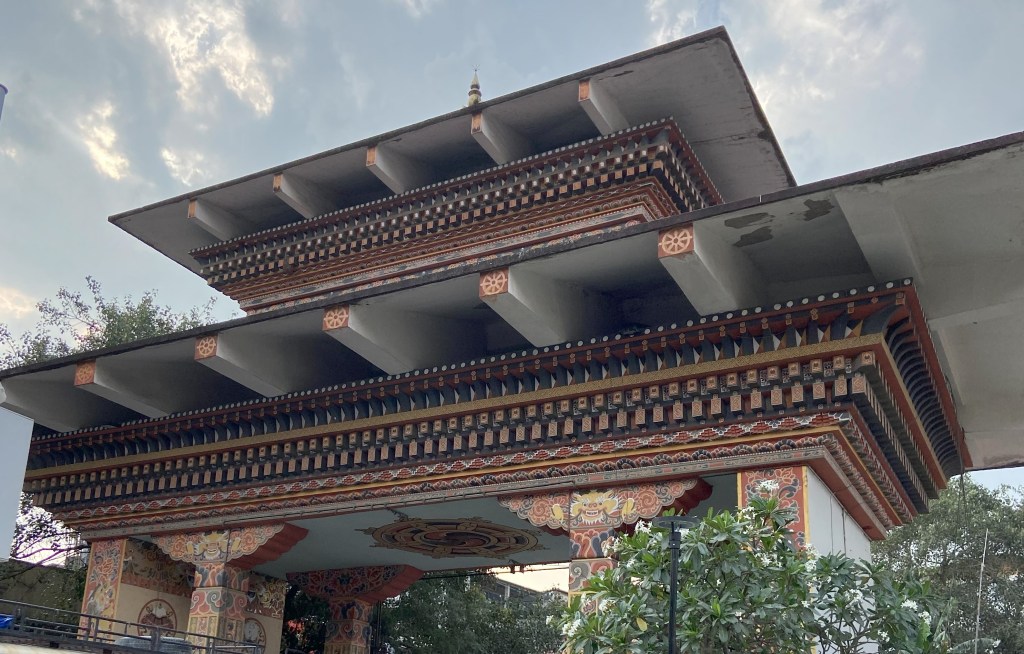
- The drive from Phuentsholing to Thimphu is extremely scenic and if you go in the winters, you are likely to witness a stretches completely surrounded by clouds. Plus, it gets dark at around 4-5 pm during winters. So the views are short-lived. We grabbed some quick lunch (Thukpa) on the way and resumed our journey
- Reached Thimphu at around 6.30 PM, and checked into our stay. This is located right beside a stream with some great views. Had an early dinner and took a walk to explore the neighborhood and retired for the night
🧳 AK’s Travel Tidbits 🧳
- Since it gets dark pretty early during winters, it is usually preferable to start your day early (by 7.30-8 AM) to avoid losing out on time
- Plus, the tour guides generally operate fixed hours, so if there are any delays, they could just skip out things on your itinerary and wrap up by 5.30
- Whenever you’re visiting a temple or a monastery, do ensure you’re dressed appropriately (for women – avoid clothes which tend to go above your knee length and might be too revealing)
Day 2: Thimphu Sightseeing
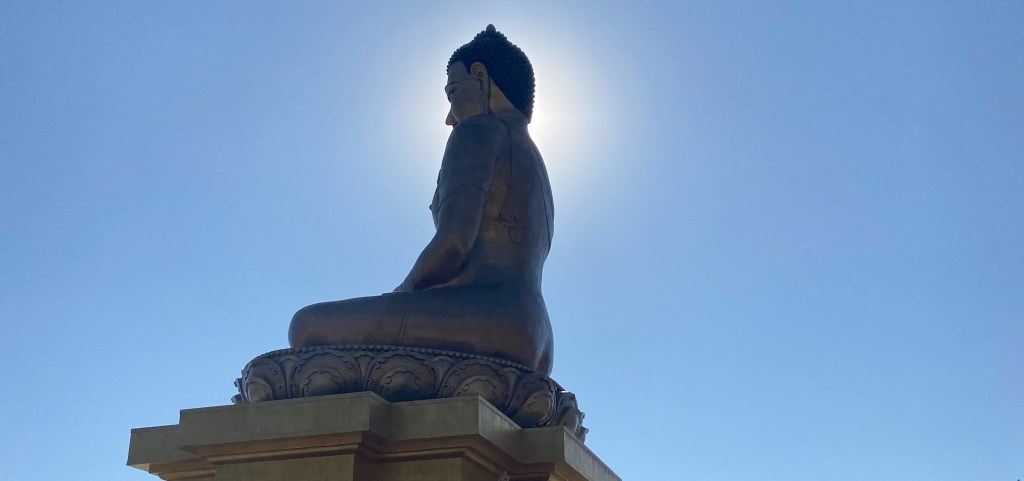
- After freshening up and a fulfilling breakfast at the hotel, we headed to the Budhha Dordenma – the largest Buddha statue in Bhutan, and one of the largest in the world. The statue houses 125,000 smaller statues inside of it. The monastery underneath the statue also has intricate paintings depicting Buddha’s life and is extremely peaceful if you go early in the morning. The entry ticket is 300 Nu per person
- After spending some time here, we headed to the Royal Takin Preserve – a conservation centre for the Takin – Bhutan’s national animal. This is pretty much like a national park right in the centre of the city and taking a walk here is a great way to soak in some much-needed sun
- We then headed to Simply Bhutan – a live, interactive museum resembling a traditional Bhutanese village. After getting a good glimpse of the cultural heritage of Bhutan and spending some time here, we were then treated for a sumptuous meal consisting of traditional Bhutanese delicacies – including their signature dish – Ema Datshi
- After a good meal, we headed to the National Institute for Zorig Chusum, a centre that offers courses to students on the 13 art forms of Bhutan and it was indeed thrilling to see how many youngsters were invested in learning the traditional art forms of the country
- We then headed to the Central Post Office, got a guided tour of the evolution of post in Bhutan and then shopped for some stamps as souvenirs
- After this, we were dropped back to the hotel by our driver. We freshened up, and then took a local cab to the clock tower area to explore the city. Grabbed some Momos and Chowmein at a local restaurant and then headed to Mojo Park, a place popular among the locals for the live music and took a cab back to the hotel. The local cab drivers are quite friendly and despite being a group of 4 girls, we never felt unsafe while travelling late in the night
Day 3: Travel to Punakha and sightseeing
- The next morning, we started our journey to Punakha valley, a 2 hour journey from Thimphu
- On the way, we stopped at Dochula Pass, where 108 memorial chortens or stupas have been built by the queen mother of Bhutan in honour of the Bhutanese soldiers who were killed in the battle against Assamese insurgents from India
- There is a small cafe near the pass where you could grab some coffee and a quick bite since it gets really cold around here
- After spending a good 2 hours here (which was beyond the time we were ideally allowed to spend – since we had to cover more ground on the road), we continued our journey to Punakha
- We then stopped for a quick lunch at a place near Chimi Lhakhang – this is an interesting town, which houses a temple of fertility and is highly revered among the locals (be prepared for some explicit paintings on the walls of all the houses in this town). We decided to skip the temple though
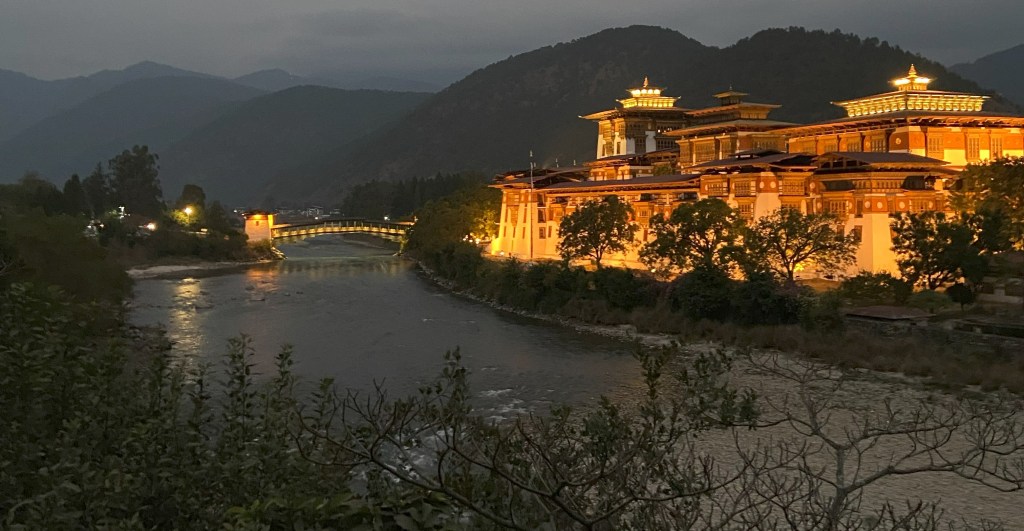
- We then continued our journey to Punakha and headed to the Punakha Dzong – a majestic fort located on the banks of the Punakha river which once acted as the seat of the government and the winter capital for the Royal family since the town is quite warm
- The Dzong takes about 1-2 hours to get a thorough view of it after which there is a short hike to the Punakha suspension bridge – one of the longest suspension bridges in Bhutan. The bridge offers a great view of the river and makes for a great photo spot
- After this, we headed to our stay for the night. We then headed out for dinner at one of the local pizzerias (which was quite a surprise since the pizzas were quite good for a town that spreads 3 streets!)
Day 4: Punakha to Paro
- The next morning, we started our journey to the town of Paro – a 3-4 hour drive from Punakha and on the way, stopped by a the royal botanical gardens – this is a little underwhelming – can skip
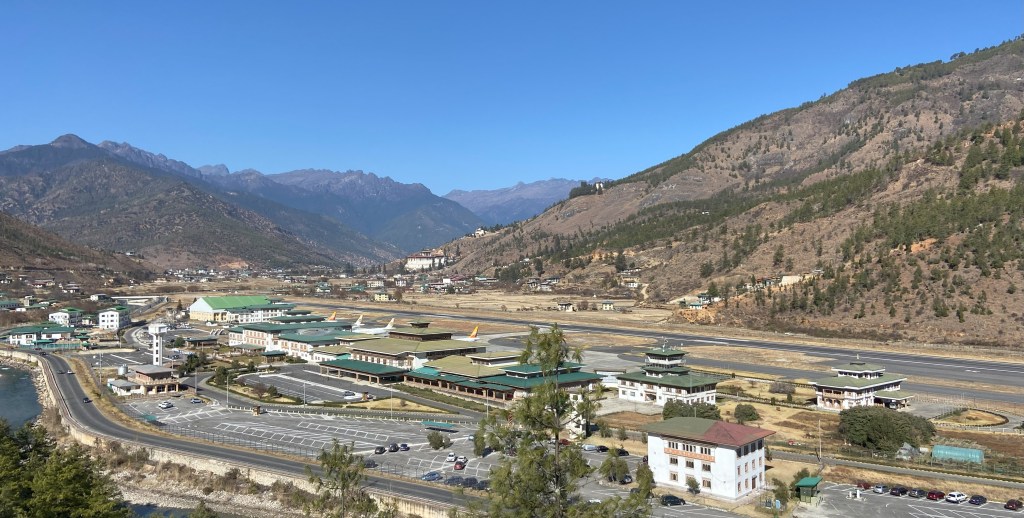
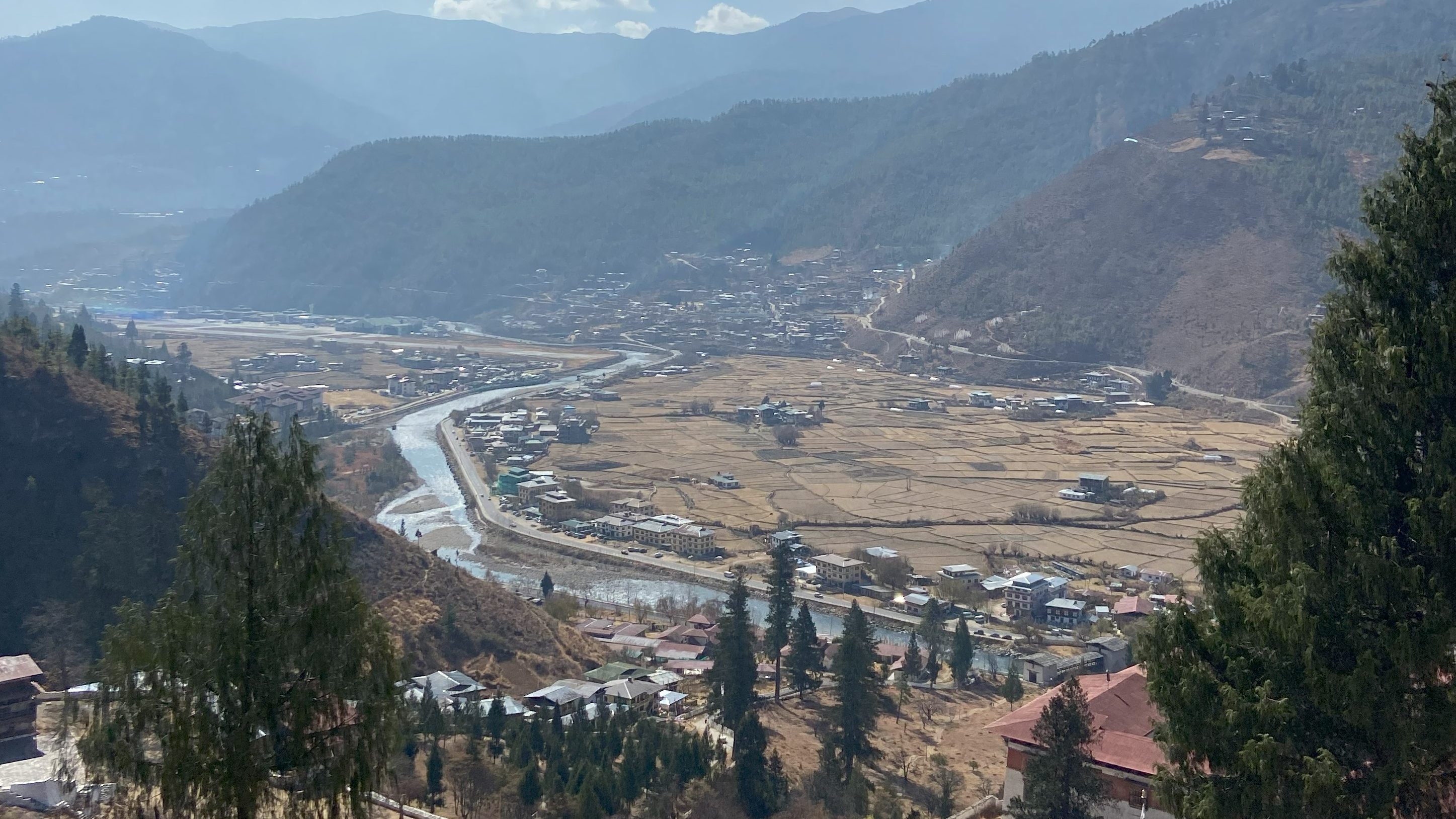
- We then stopped at a point for a bird’s eye view of the Paro Airport – one of the most dangerous runways in the world and it indeed requires a lot of skill to be able to fly a plane here. The flight timings are very unpredictable – so you could also just stop for a view and then continue your journey if you’re not enthusiastic about watching a plane land/ take off
- Reached Paro in the evening at around 5 PM and went to a store to try out the local Bhutanese attire and click some pictures
- We then explored the Paro main market in the evening – if you would like to shop for some winter clothes and souvenirs, Paro market is the best and cheapest. Apparently, the peach wine – Zumzin is also a popular souvenir (since its cheap and unique)
- Retired for the night after having a wholesome thali at the hotel – Tshang Tshang Villa
🧳 AK’s Travel Tidbits 🧳
- The weather in Paro can get really cold and can drop to subzero temperatures in winters. So, it is highly recommended to carry enough warm clothing (preferably with fleece lining)
- While the hotels do provide heaters inside the rooms, if you want to chill at the lobby or balcony, warm clothing becomes essential
Day 5: Paro Tigers’ Nest trek
- This was the most awaited and exciting part of the entire trip for me personally since the trek was on my bucket list for the longest time
- If you’re a trekking (or in general nature) enthusiast and want to get some unreal views of the mountains, you cannot afford to miss this trek when in Bhutan
- We started early in the morning (7 AM) after a healthy breakfast at the hotel towards the base camp of the Tigers’ Nest or the Paro Taktsang it is highly recommended to start as early as possible to avoid getting tired because of the sun as the day progresses
- While the total distance of the trek is 6.5 kms (up and down), it feels much longer and gets more tiring than your usual hikes because of the elevation and the weather conditions (it can get really cold in some parts of the trek)
- One can come across several view points during the trek – a prayer wheel with a back drop of prayer flags, a point overlooking the monastery where you can get the best view of the Taktsang, a waterfall
- There is also a cafeteria at the mid point of the trail for freshening up and grabbing a quick bite or a cup of coffee . One unique part of this trek was the number of friends you make along the way – youngsters to 60+ year olds – all of them are here. Plus, this monastery holds religious significance for all the Buddhists and so a lot of people come from the northern regions of India and China
- We then reached the monastery at around 1.30 PM and began the descent after spending about an hour there
- After returning from the trek we went for a traditional hot stone bath – the perfect experience after the strenuous trek. This is a traditional bath where one takes a dip in hot water with some traditional herbs put in a tub and hot stones are used to reheat the water – this ensures the temperature of the water increases gradually and the bath is a pleasant experience.
- The hot stone bath is usually hosted by local farmers’ families who greet you with some hot butter tea and make you feel at home – must try!
- Retired for the night after a quick dinner at the hotel

Day 6: Paro Sightseeing and return to Phuentsholing
- The next morning we headed to explore the Paro Dzong – a fort now converted into a museum with artefacts and paintings hundreds of years old preserved carefully and displayed very aesthetically. The Dzong also has some shows and displays of the traditional dances in Bhutanese culture and the significance of each of the face masks used in the dances
- After getting a brunch at one of the popular cafes in the Paro main market, we began our journey back to the border town of Phuentsholing. On the way back, we stopped at a couple of view points
- Reached Phuentsholing at around 6 PM in the evening and stayed there for the night and headed back to Bagdogra the next morning by road to catch our flight back to Bangalore

 Roamantic Affair