
Water in all shades of blue one can imagine on one side and ripples of the desert on the other, combined with heritage and culture, Oman is definitely one of the best-kept secrets in the travel space.
Ideal for a road trip, this country has some of the best roads to drive around in while soaking in the ever-changing landscapes.
Read on to know more on how to plan that ideal road trip in Oman.
- 🗓️ High-level itinerary
- 🍜 Food
- 🏡 Stay
- 💰Budget
- ✈️ Flights and Internal transportion
- 💵 Visa and Forex
- 📝 Detailed Itinerary
🗓️ High-level itinerary
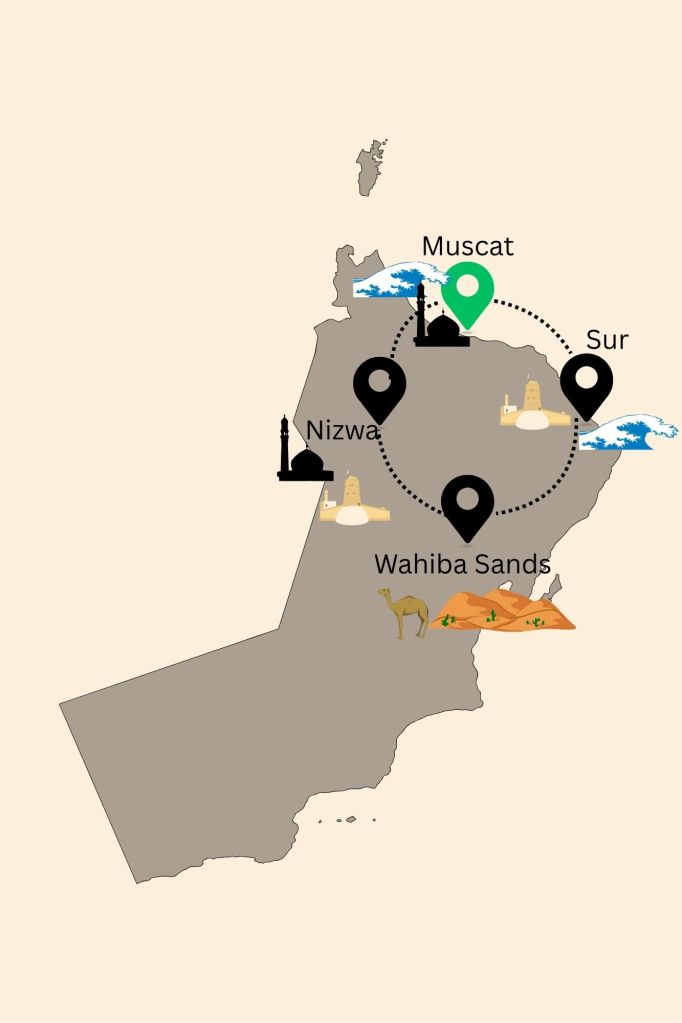
Oman has 2 major cities – Muscat, the capital city which is located in the north and Salalah, which is located in the south. Typically, the north itself (Muscat and surrounding cities) require 6-8 days. So Salalah and the regions around it require a separate trip altogether.
We had covered Muscat and the surrounding region for 7 days.
- Day 1 and 2: Muscat
- Sultan Qaboos Mosque, Old Muscat, Muttrah Souq
- Ad Daymaniyat Islands (you can book the tour here), Royal Opera House
- Day 3, 4 and 5: Sur + Desert camp
- Bimmah Sinkhole, Wadi Shab, Tiwi Beach
- Sunaysilah Fort, Dhow Factory, Bilad Sur Castle, Al Ayjah Lighthouse and watchtower
- Wahiba sands – overnight
- Day 6 and 7: Nizwa
- Wadi Bani Khalid, Birkat Al Mouz, Nizwa Souq (Evening)
- Nizwa Souq (Morning), Nizwa fort, Old town
- Alternatively, you could also opt for a day trip from Muscat to Nizwa. Check out the link here.
One thing to keep in mind when you’re packing outfits for Oman is that it is a relatively conservative country. So bikinis and short dresses are generally considered disrespectful and are frowned upon by the locals. The only place where we saw them being okay with bikinis and swimsuits is the Ad Dimaniyat Islands. Even for men, it is preferable to wear full-length trousers at all public places. Especially towns like Sur and Nizwa, which are even more conservative, plan modest outfits that cover your knees and shoulders.
🍜 Food
- Muscat
- Ramssa – Authentic Omani cuisine – Must try the Mandi and Luqaimat
- Juice World Mutrah – really good fresh fruit juices
- Bait Al Luban – Traditional Omani Cuisine
- Sur
- Zaki restaurant
- Nizwa – It is a little hard to find good places offering vegetarian food in Nizwa since it is not as commercialised as Muscat and Sur. So you will just have you try your luck with some of the random places you spot while walking around.
🏡 Stay
- Muscat
- Golden Tulip – Near Sultan Qaboos
- Riyam Hotel – Near Muttrah
- Sur
- Nizwa
- Bait Alhara – Located in the heart of Old Nizwa, and attached to the Nizwa fort
💰Budget
| Expense | Cost | Comments |
| Flights to & from India | Rs.30,000 | Round trip |
| Internal Transportation | Rs.10,000 | If you rent a self-drive car (sedan). This may go up if you opt for a 4WD and increase even more if you go with a driver |
| Accommodation | Rs.30,000 | Rs. 5k per couple per night |
| Food | Rs.20,000 | Rs. 3k per day |
| Experiences | Rs.15,000 | Snorkelling, entrance to monuments |
| Miscellaneous | Rs.10,000 | Shopping, visa fees |
| Total Budget | Rs. 1,15,000 | per person |
✈️ Flights and Internal transportion
Flights – We booked a round trip to Muscat. Oman Air has direct flights from Bangalore. Indigo/Air India Express has one stop at Kochi.
Internal transportation – Public transportation in Oman is quite bad for both intra and inter city travel. One can still manage by booking cabs within Muscat using an app Otaxi. However, intercity travel is going to be challenging without a rental.
We hired a sedan (2WD) right at the Muscat airport. We had made an advance booking online with an airport pick-up option. We rented it from Green Motion, which was Discovery earlier. They offer high-quality cars at competitive prices. NAB rental is also a good option, but it is slightly more expensive. We booked it for the entire duration with a drop-off option at the airport.
💵 Visa and Forex
Visa – An Oman visa requires a sponsor; it is much easier and more convenient to apply through service providers like Atlys. They charge a certain commission but it is worth the peace of mind. You only need to spend 5 minutes to submit the application, and you will receive your visa within 5 days in your inbox. Would highly recommend using them.
Forex – Oman’s currency is Omani Rial (1 Rial = 230 INR in Dec 2024). It is generally tough to obtain this Forex in India, so we carried USD and exchanged it in Muscat. Please avoid exchanging it at the Muscat airport, as the exchange rate is not very favorable. Once you are in the city, go to any currency exchange centre, as they will offer the rate that is available on the internet without any commission. We got ours exchanged at Unimoney in Lulu Hypermarket. We also had a HDFC credit card which we used for large transactions – they charge around 2.2% markup fee but award 3.3% rewards, so it worked out well overall for us.
Most of the places in Oman accept cards, carry cash only in case of situations where cards do not work. For a week-long trip, we had carried only $200 in cash.
📝 Detailed Itinerary
Day 1: Land in Muscat
Muscat is huge city and one could chose to stay either in the Mutrah area or near Sultan Qaboos. Each of them has its pros and cons. We stayed for one night near Mutrah and the other night near Sultan Qaboos. Staying near Mutrah makes it easy to explore Mutrah Souq and the old Muscat areas. Staying near Sultan Qaboos makes it easier to explore the mosque, the Opera House, the Ad Daymaniyat ferry point, and is closer to the airport.
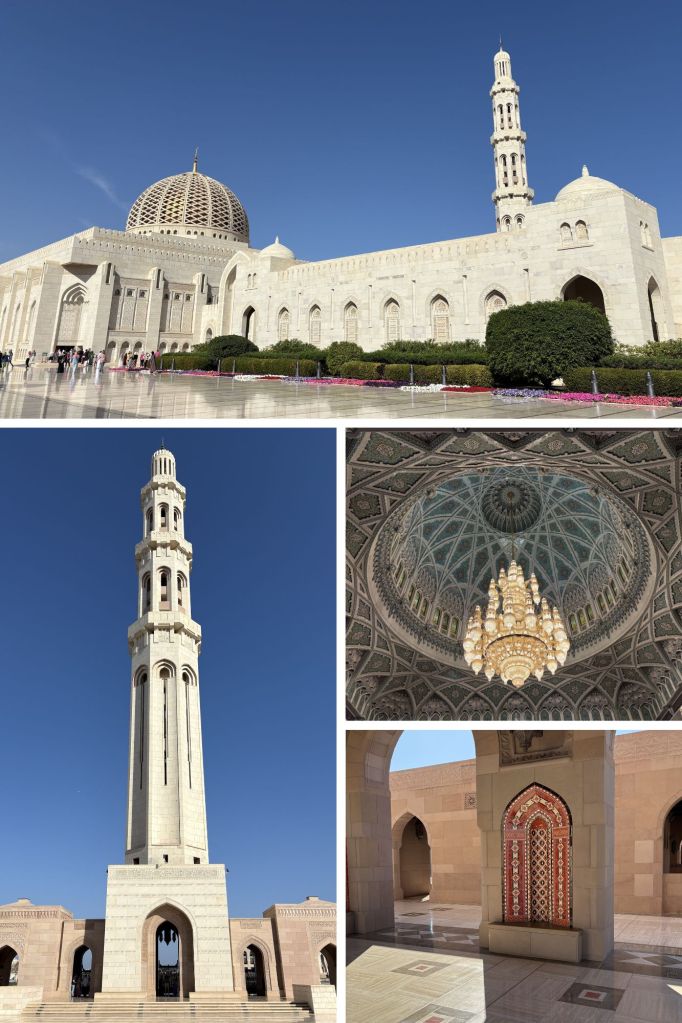
If you are landing early in the morning, would recommend you to cover Sultan Qaboos the first thing. This is the largest mosque in Oman and is open to public only between 8 – 11AM everyday except Friday. So we recommend you to have enough buffer time for this. In terms of clothing as well, it is quite strict here. Your arms and legs will need to be covered. So make sure you are dressed accordingly or have a jacket and scarf handy.
You will start to get a sense of the magnanimity of the mosque just as you pass by it on the road as well. It is a structure that cannot be missed. But once you enter, you realise that the grandeur of the mosque is unparalleled. The fine mosaic inlay work all across the periphery of the mosque add just the right amount of colour to this majestic white structure.
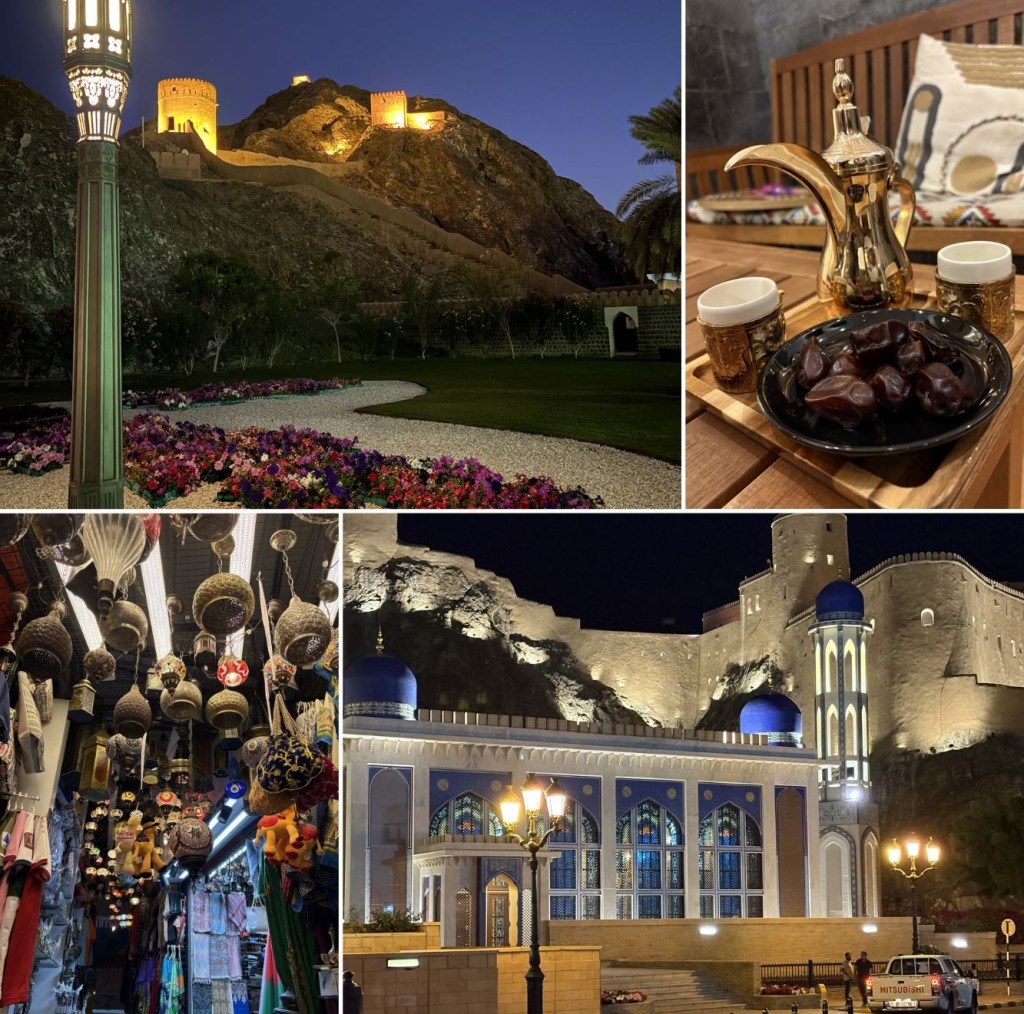
We then checked in to our hotel in the Mutrah Souq and then headed to old Muscat. We visited Al Alam Palace and strolled around the lanes of old Muscat, grabbed some coffee and dates at a quaint cafe in the neighborhood and ended our day at the Mutrah Corniche. Since it gets dark quite quickly, it is recommended to start your day early and end it early as well.
Day 2: Day trip to Ad Dimaniyat Islands
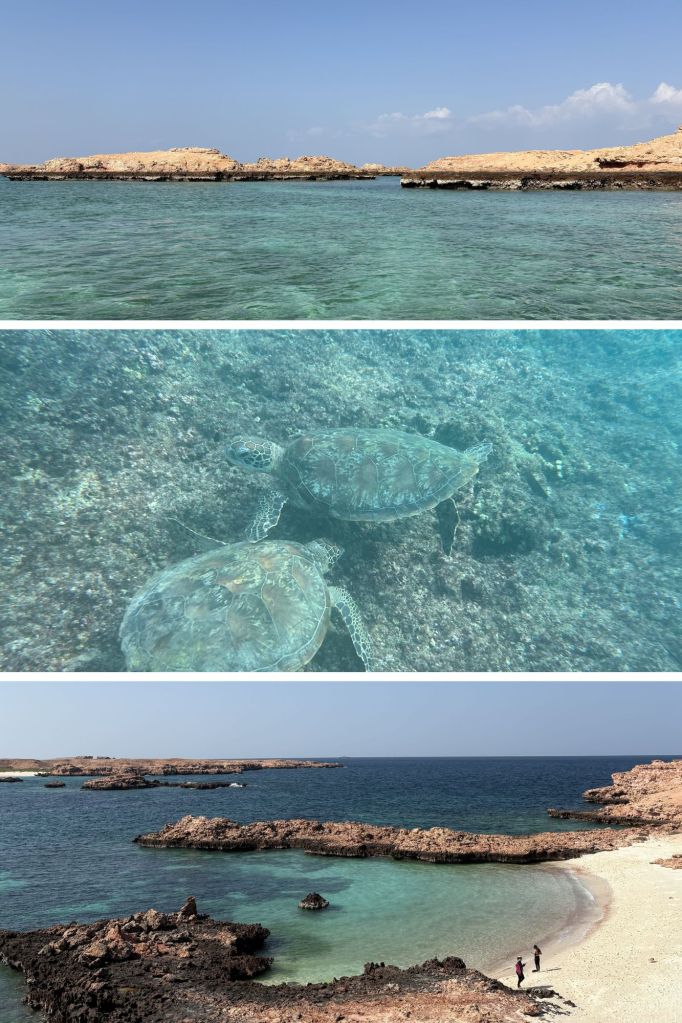
The next morning, we headed to the Al Seeb port to begin our journey for a day of adventure at the Ad Dimaniyat Islands. The islands make for an extremely picturesque location with clear, turquoise blue waters meeting the desert landscape – something that we were witnessing for the first time. The islands are popular for their rich sea life including turtles, corals (some rare ones), and a variety of colorful fish, all of which can be witnessed by snorkelling.
There are 2 spots at the islands, where people usually stop – the first one is for snorkelling into the deep waters (depth can range upto 20m) where you literally need to jump off the boat in the middle of nowhere. Just a heads up, it can get a little scary if you’re not an experienced swimmer or if you have a fear of water.
After spending some time here, we headed to the next spot, which was a small beach from where you could snorkel, just enjoy the cool sea breeze or even have a good swim in the shallow waters. We spent about an hour here and then started our journey back to Muscat. The ferry ride takes about 30 mins each way and we came back to our hotel by 2pm and got ready for the next part of our day.
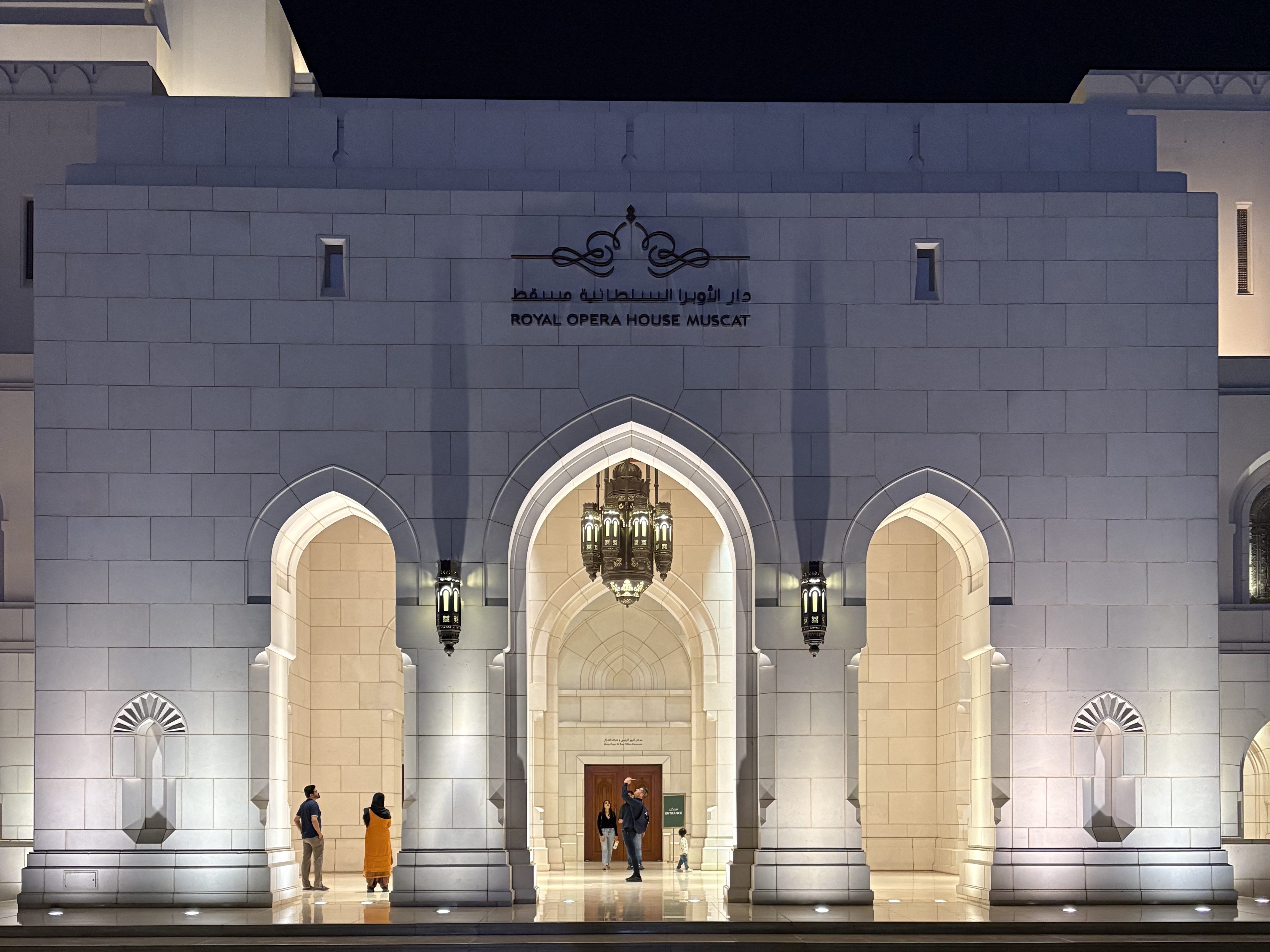
After having a traditional Omani meal at Ramssa, we headed to the Royal Opera House at Muscat. The Royal Opera house is a premier venue for arts and music events in Muscat. If you happen to be on a day when there is a show happening, do check if you can get tickets to the show, which would be the best way to explore the place. If not, make sure to go on a day when there are no shows lined up since the access to the stage area may be closed and restricted only to the lobby/ foyer area, which is definitely not worth the price you would be paying since you can get a glimpse of this from the waiting area itself.
After spending around an hour here, we headed to the Al Ghubrah beach. This is usually where the locals gather on weekends to spend time with family and hence, can get quite crowded. Since it got dark by 6pm, we went around walking in the lanes of the neighborhood and had some interesting conversations with a few locals there.
We ended our day with a simple meal at an Indian restaurant located near our stay.
Day 3: Drive to Sur (enroute cover Bimmah Sinkhole and Wadi Ash Shab)
Next morning, we started our journey at around 6 am to Sur, which is located around 2 hrs away from Muscat.
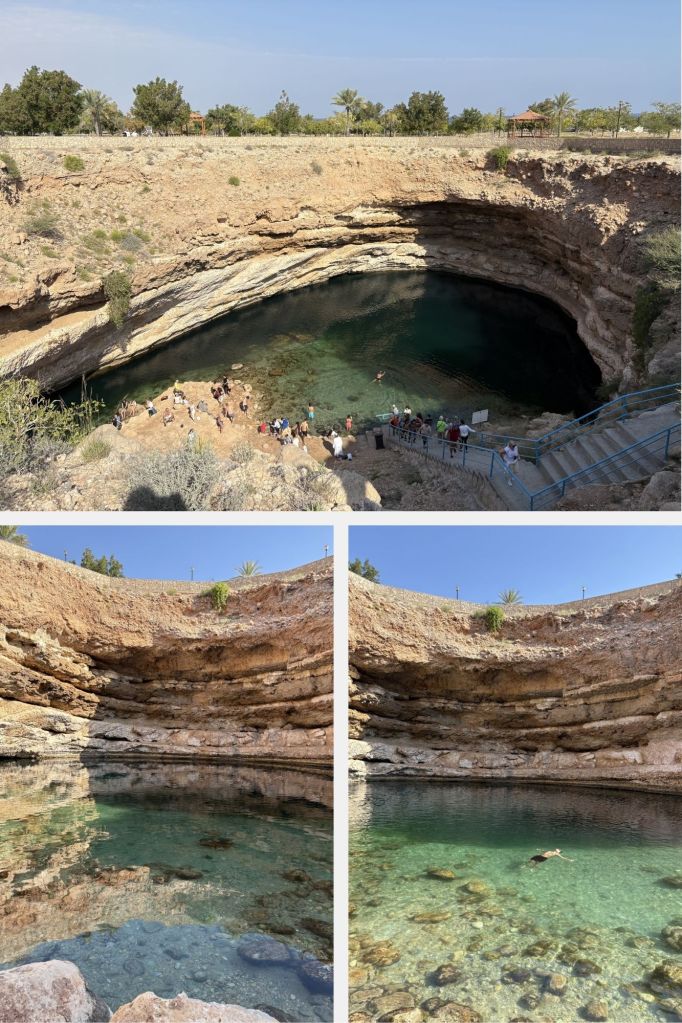
On the way to Sur, we stopped by 2 major attractions – the Bimmah Sinkhole and the Wadi Ash Shab. We got to the Bimmah Sinkhole at around 8 am – just when it opened and practically got the entire place to ourselves. The Sinkhole was formed by the surface layer of limestone collapsing, creating a saltwater lake and is truly a natural marvel.
Would highly recommend one to visit this if you want to experience the magnanimity of what nature can create. We were left in awe! Due to the high salt content and its proximity to the sea, it is also easy to float in the sinkhole and makes for a good spot to relax before the crowd starts flowing in.
The water is extremely clean and turquoise blue in colour. There are clean washrooms and changing rooms available at the sinkhole.
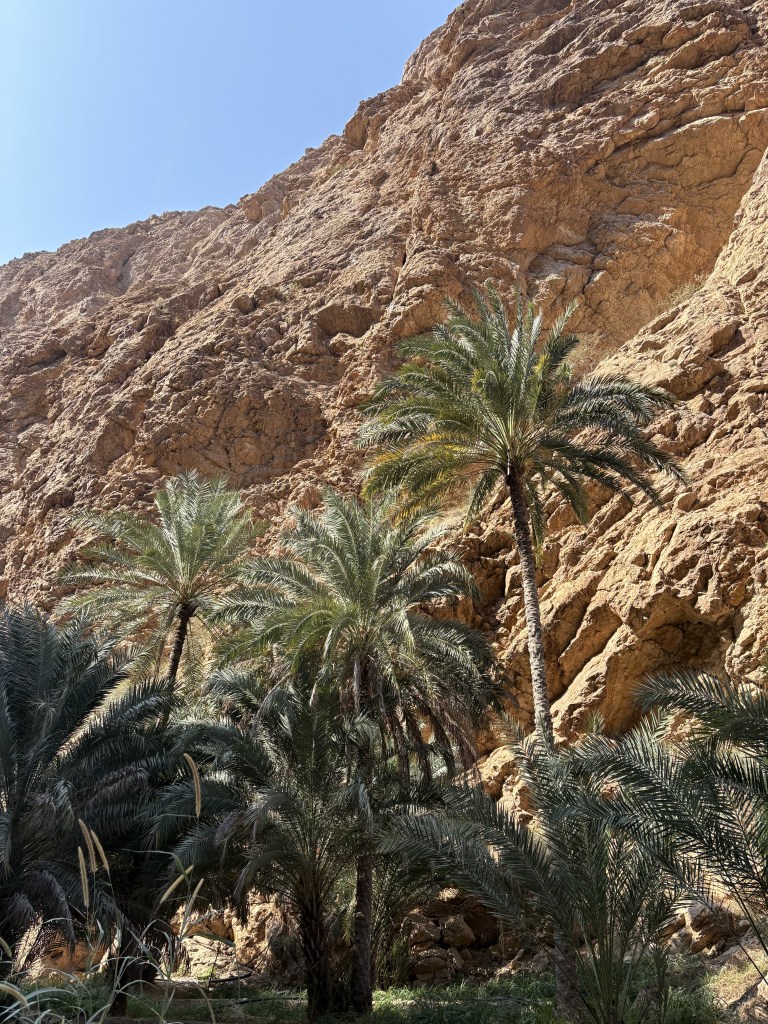
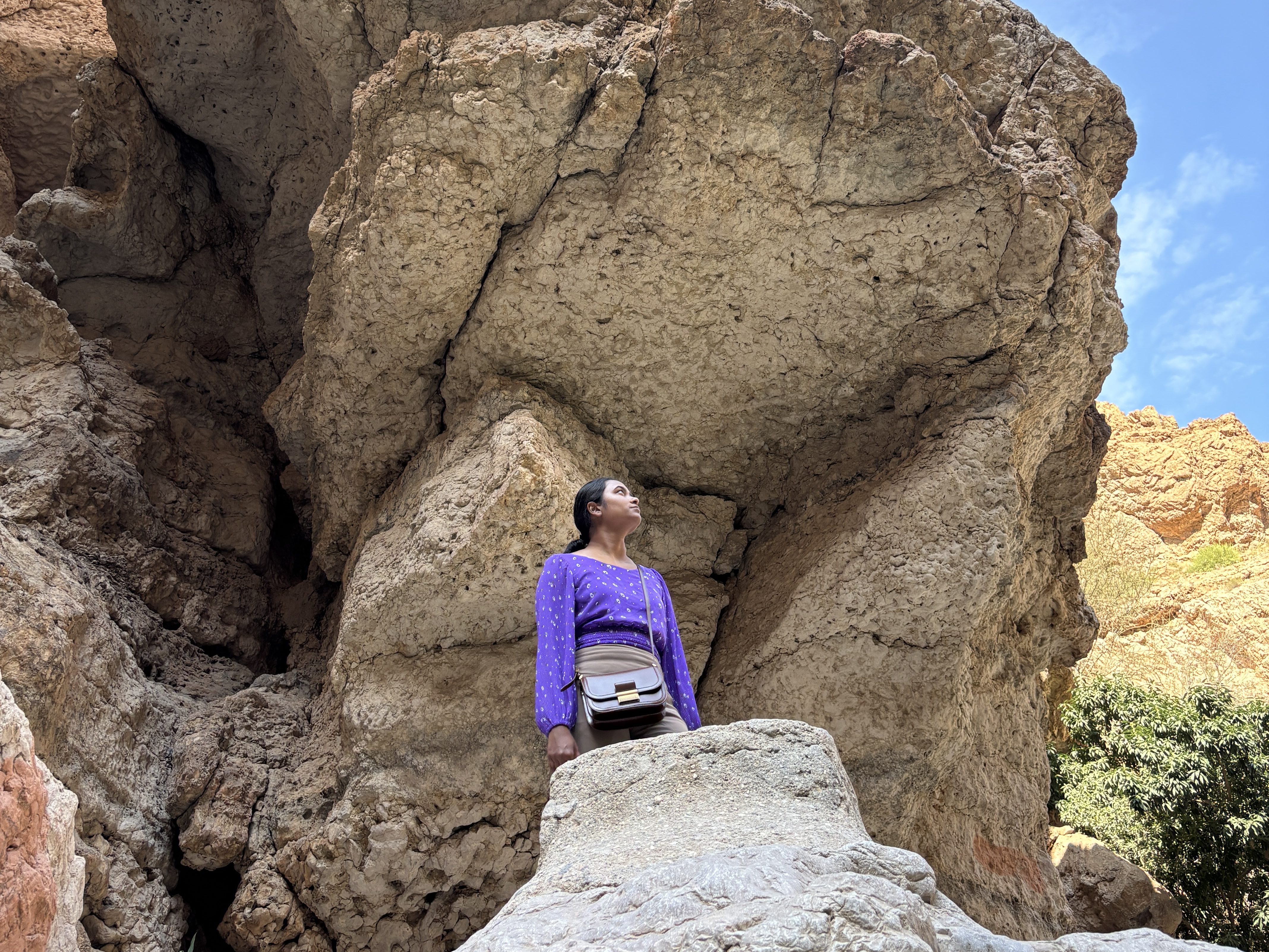
Next, we headed to the 2nd adventure of the day (and probably the most exciting part of our trip) – Wadi Ash Shab. “Wadi” is a local word for valleys and this is truly one of the most magnificent landscapes we have witnessed.
The whole experience of the Wadi starts with a short boat ride to cross the river after which you begin a hike of about 2-3 kilometers. The boat ride costs 1 OMR per person for the return journey. You will need to pick up all the gear that you need at the boat station itself – the life jackets, waterproof sandals, waterproof covers for your day packs, etc. After hiking for about 1 hr, you reach a spot where you can see everyone cliff-jumping into the waters. You can either choose to do this and swim ahead, or walk a little ahead and descend to the water gradually and then swim into the river from the ground.
Initially we were skeptical about the last part where you need to swim since we were not sure about how much swimming it entails and what lies ahead, given that both of us are amateur swimmers. However, thanks to some fellow tourists who convinced us to go for it and assured us that it was safe with life jackets. And we are glad we did it, since it was one of the best experiences we’ve had in our lives so far!
You need to wade through the waters for about 45 minutes until you reach a narrow creek. Once you reach there, you can see glowing blue waters. As you swim through the creek, you come across an underwater cave with a waterfall inside. It can be intimidating at first, but once you get used to it, you will start to enjoy the feeling of floating through the water, and is truly meditative.
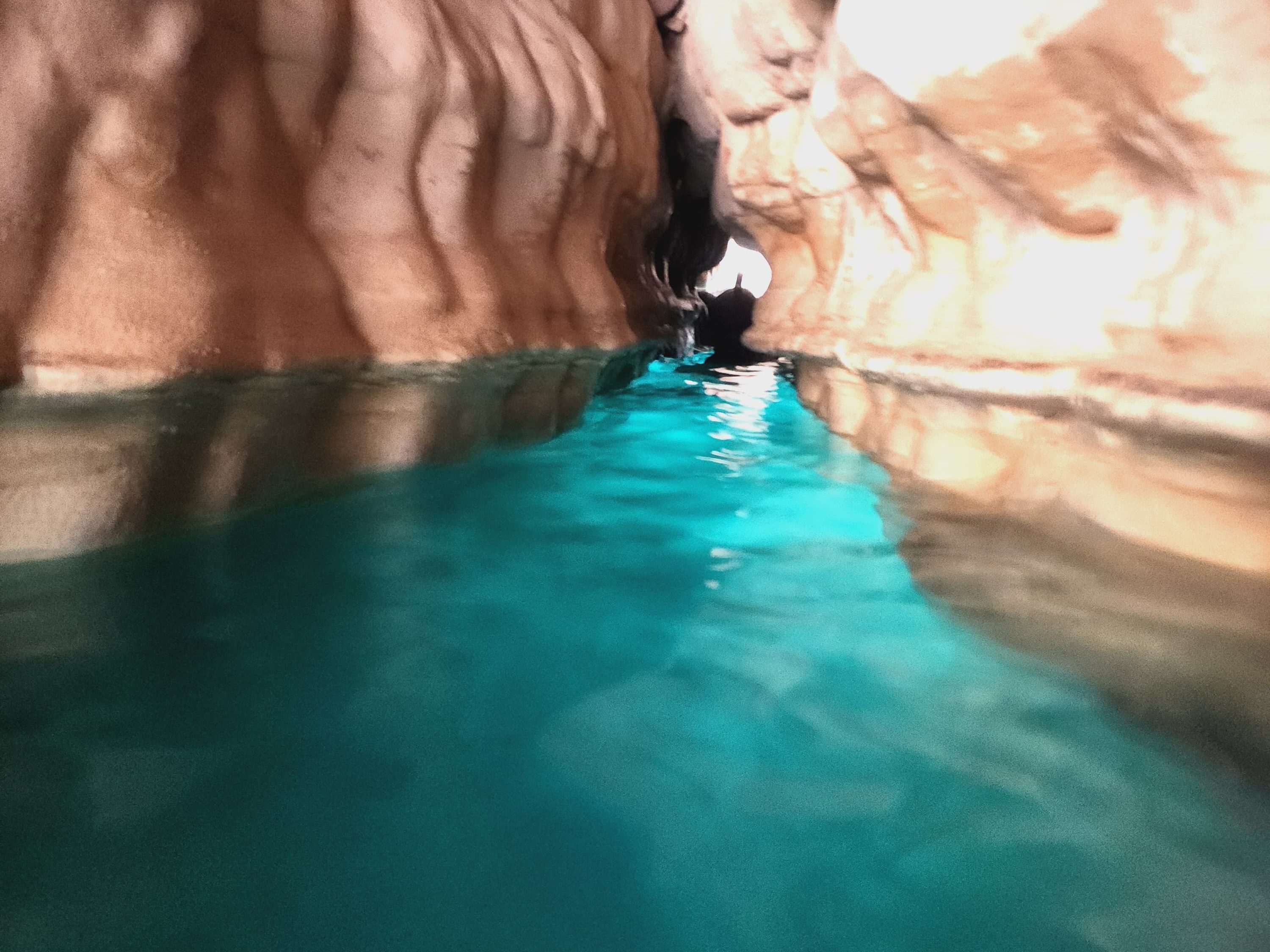
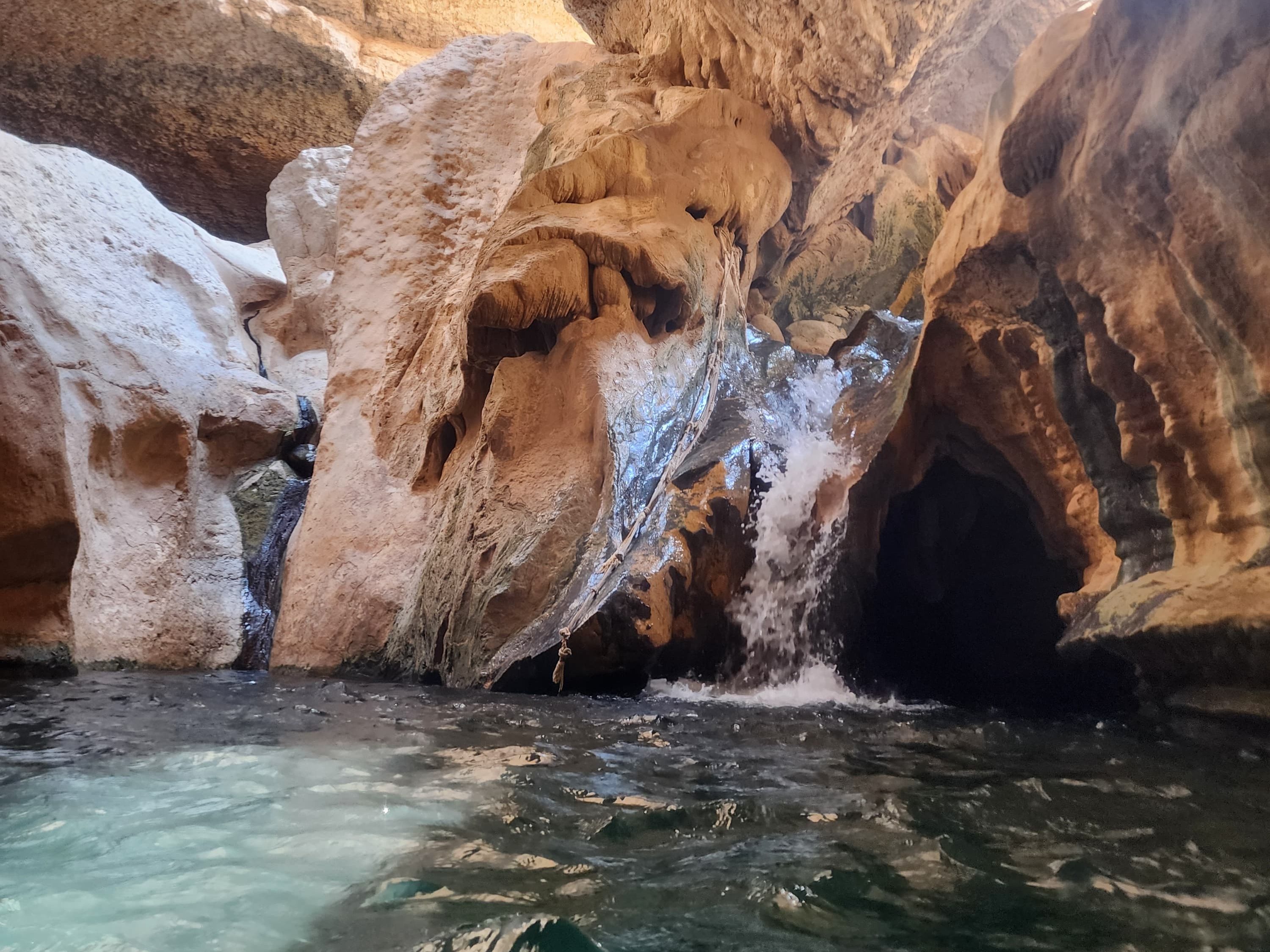
Then we headed back following the same route (hike of 45 mins – 1 hr + boat ride) and drove to the town of Sur where we’d booked our stay. There are also a lot of stay options near Wadi Shab or in Tiwi with a view of the sea if one prefers that.
Day 4: Sur Sightseeing
The next day, we set out to explore the port city of Sur. Given its port history, the city also has a huge shipbuilding industry (more on this in the coming paras).
We first headed to the As Sunaysilah Castle – a 300 year old castle which provides a great view of the entire city of Sur.
After spending some time here, we headed to the Bilad Sur fort. The castle is a window into Oman’s architecture and heritage to some extent. While the fort is extremely well-preserved, since it is not run by a professional agency, the opening hours may be uncertain. We were lucky to have been able to find it open when we visited. The entry fee costed us 2 OMR per person (~INR 220 per person).
The minimalistic architecture and unique Persian architecture inspired castle designs kept us occupied for a couple of hours. The only drawback is the lack of guides or any written material around the history of these castles which makes the whole experience feel a little incomplete.
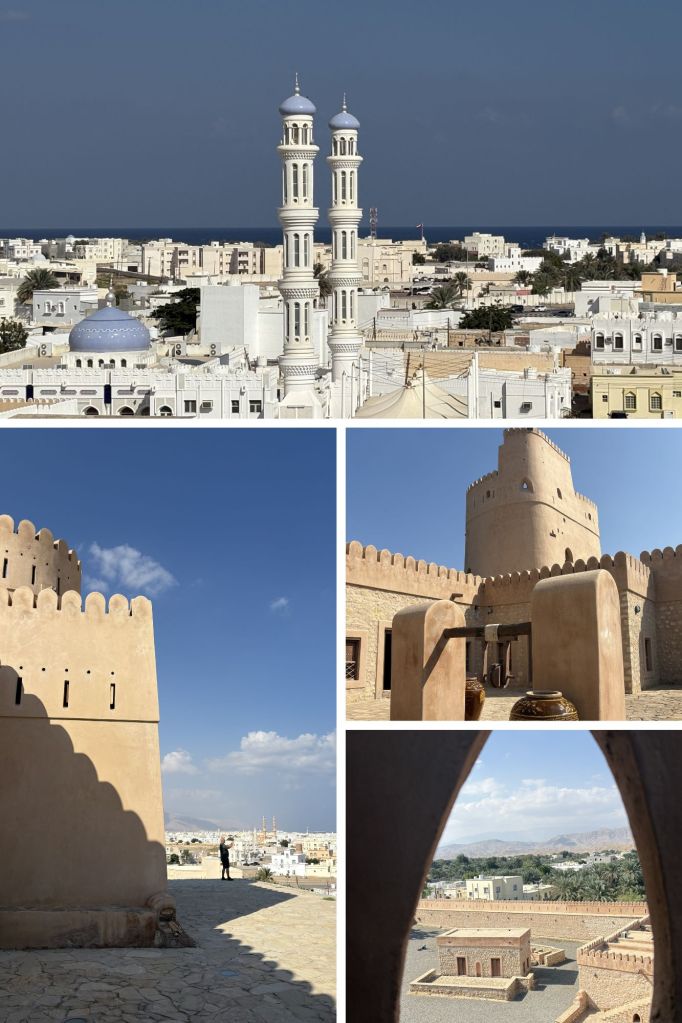
After breaking for lunch, we headed to the Dhow Factory and Museum. The entry fee costs 2 OMR per person and includes a visit to the museum and also an under-construction Dhow where you can freely walk on the ship to understand how the structure works and get some photographs.
Dhows are traditional boats that were earlier used for trade. ‘Dhow’ is a traditional Arabic term for a boat with 1 or 2 masts. Since Sur was a port city, it was but natural for a shipbuilding industry to also thrive in this region and that’s how traditional Dhow-making factories started. To this day, Dhows are still manually built at this factory. The museum is also very informative and provides detailed history of how trading evolved in Oman and how the Dhow making industry also thrived over time with various images and interactive installations. They also have complimentary coffee and dates!
After this, we headed to the Al Ayjah Lighthouse. This makes for a great viewpoint to catch a glimpse of the city. The historical significance being that this played a pivotal role in maritime trade in Sur.
We then headed to the Al Ayjah Watchtower to catch the sunset. There are 3-4 towers in all and you can choose to climb towards any of them. We went to the one near Al Ayjah Plaza Hotel. It was a short hike of 15-20 mins to the watch tower from the hotel. From here one can see the lagoon surrounding Sur and a clear view of the sunset. It was the perfect end to a beautiful day.
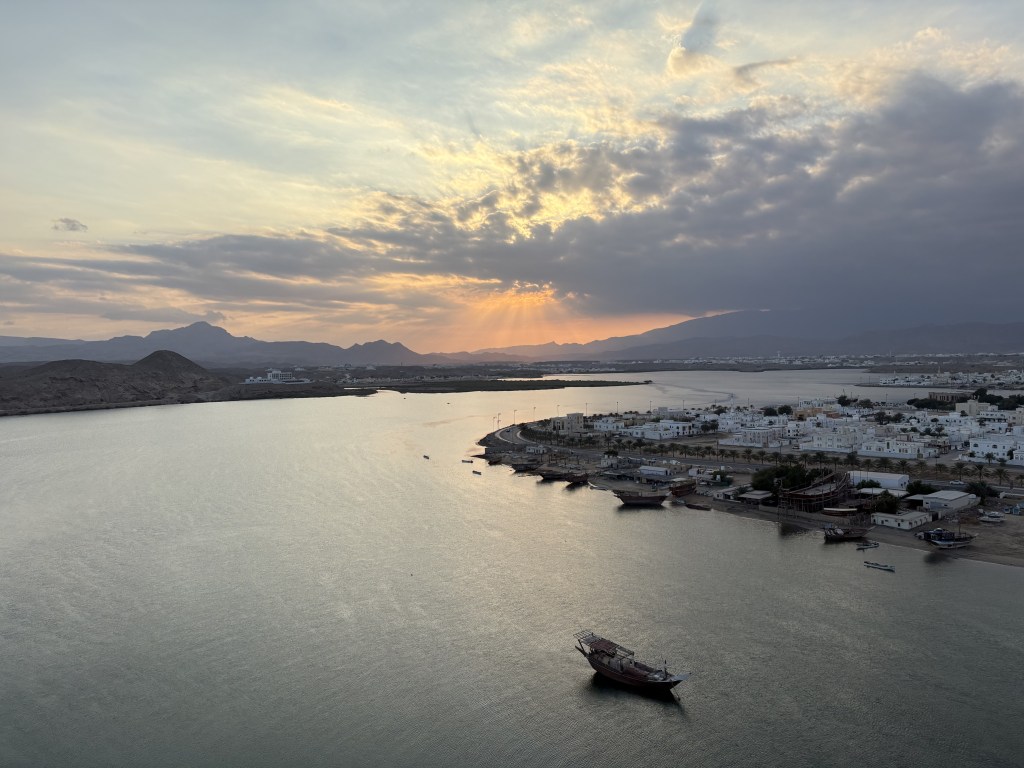
Day 5: Wadi Bani Khalid and Wahiba sands
We started our day early and started our drive towards Wadi Bani Khalid – another beautiful Wadi. However, this is much smaller in size and is much more commercialised than Wadi Shab. While there are spots here too where you can enjoy the natural pools, the crowd makes it a little less attractive. There is also a river side restaurant here if you wish to grab a bite. The Wadi is also more accessible, with even wheelchairs reaching upto the first pool. Beyond this point is where one would have to hike up a bit to get to the end where you can find some small streams and pools to relax for a bit.
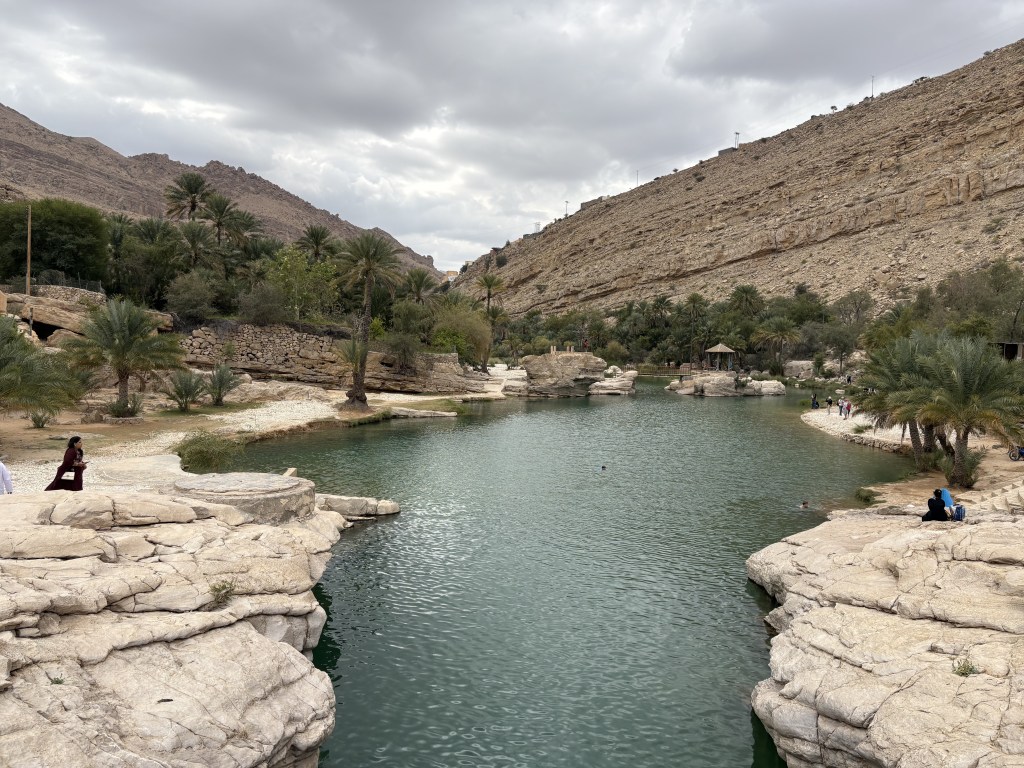
After spending a couple of hours here, we headed to the town of Bidiyah where we had the pick up for the desert camp in Wahiba Sands. If you have a 4 WD, you can head to the camp even in your own vehicle.
Once we reached there, we received a warm Omani welcome by the host with some hot Omani coffee and dates. We then headed out to explore the sand dunes and sat at one of the dunes to catch the sunset. It was a mesmerising sight to watch – the vast expanse of the sand dunes as far as the eye could see and the sun setting in the distance.
We then headed back and grabbed a quick bite from the dinner we’d packed.
We’d booked one of the basic desert camps (ie the non-luxury ones), and stays like these offer the option of a dinner which would be something they would also pack from outside since they do not have an in-house kitchen (but at a much higher price). We had opted for the package without meals and had carried some light snacks and fruits which was sufficient for dinner and a light breakfast as well.
We then retired for the night and started our day early morning and again set out to explore the dunes. As the sun started getting brighter and hotter, we descended and checked out after getting a quick bite.
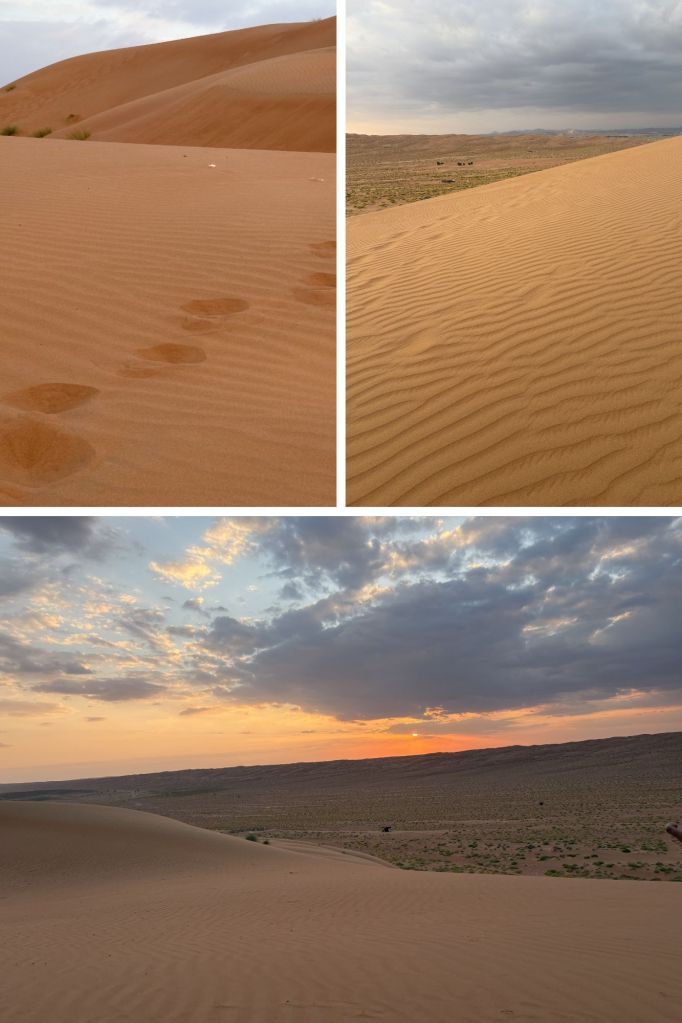
Day 6: Drive to Nizwa
We started the last leg of our road trip and drove to Nizwa. The drive from Bidiyah to Nizwa takes about a couple of hours. We made multiple pit stops on the way to get some breakfast and coffee and hence it took a little longer. We passed by the town of Ibra and were surprised to see its cafe culture and hence decided to stop at one of the cafes. We tried the pistachio latte and it was one of the highlights of the trip to be honest! The latte was bursting with pistachio flavour was packed and did total justice. Again, would highly recommend.
We then headed to Birkat Al Mouz ruins – about 30 mins before Nizwa. What used to be a village with flourishing irrigation systems and vast banana plantations has now turned into a ghost town with ruins of the abandoned houses. However, the plantations still flourish. The ruins are really well-preserved with the reception area also offering some literature on the history of the ruins. They also have a full day walking tour covering a few other spots in case one is interested.
There is also a cafe – named Banana Cafe in the neighborhood serving some amazing coffee and pistachio based desserts, with a great view. This also makes for a good refreshment spot.
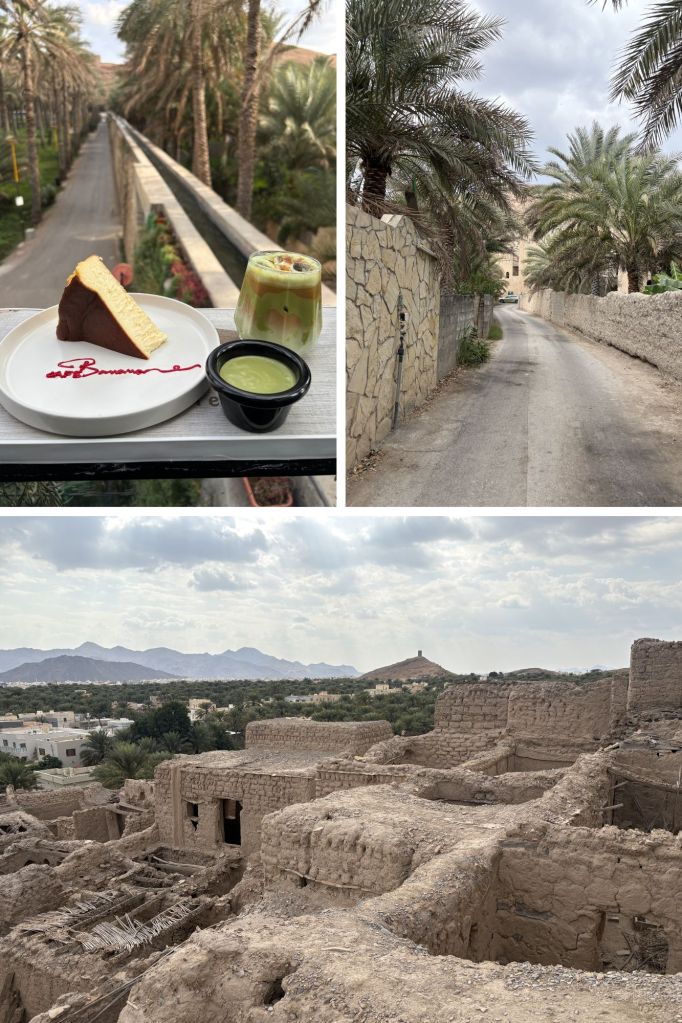
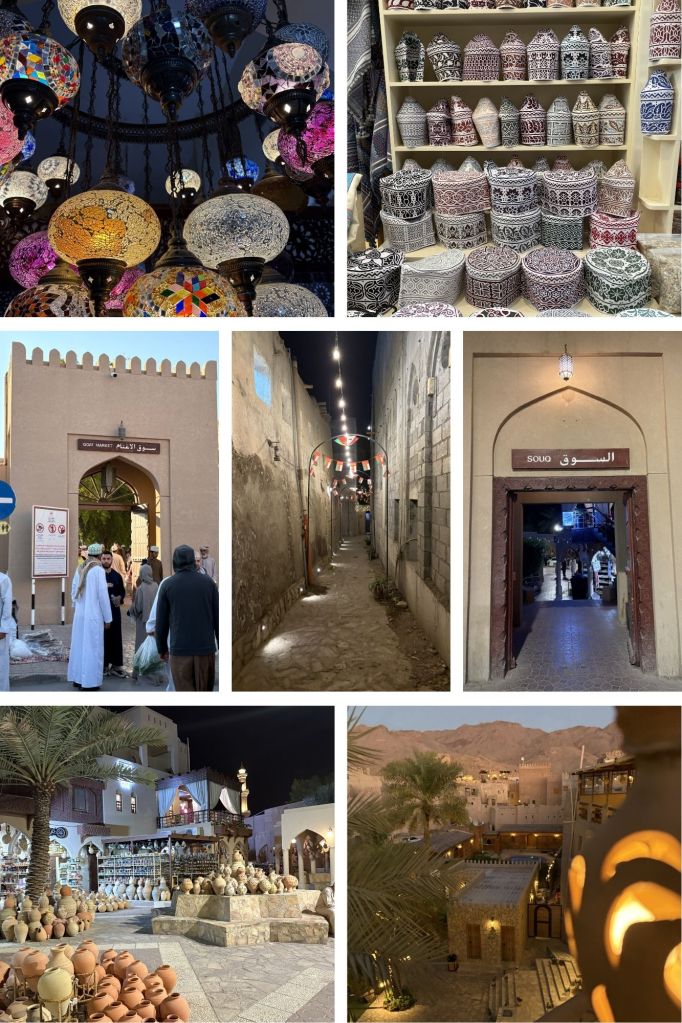
After grabbing a quick bite here, we headed to Nizwa, and reached the town at around 5.30 pm. We quickly checked into our stay and stepped out to explore the Nizwa Souq. Since it was Thursday evening, being a weekend, the Souq was bustling with activity. If there was any place that could transport you back in time, it was Nizwa that did it for us. The town is known for its silver and its pottery and the Souq has all these shops lined up and the best part being that they have retained the traditional charm. The Souq is divided into multiple areas – the dates Souq, sweets Souq, jewellery Souq, Pottery Souq, Vegetable Souq, Meat Souq. The highlight however, for us was the sweets Souq and the pottery Souq. There are several shops selling the traditional Omani Halwa and they even offer you a generous bite of tasting. We would highly recommend getting these back home if you’re someone that has a sweet tooth. It even makes for a great souvenir/ gifting option.
We then ended the day with a quick dinner at an Indian restaurant closeby.
Day 7: Nizwa exploration
Started our day early with the Goat Souq and livestock market. This was an interesting experience for us since we hadn’t witnessed something like this before. The animals are paraded in the Souq area before being auctioned off and the whole atmosphere is very lively. This starts at 7.30 am in the morning. so ensure you’re there by then since it can get very crowded and the whole thing wraps by 8.30 am. On the way to the Goat Souq, we also witnessed the weapons market – another bizarre experience where the locals buy guns and other weapons on the street!
We then went to the Nizwa Fort after getting a quick breakfast.
The Nizwa Fort is one of the most important landmarks and holds great historical significance. It was built in the 9th century and was renovated in the 17th century and most of its architecture is suited for warfare in the cannon era. The fort has numerous trapdoors and pits that have been strategically placed to navigate any enemy invasions.
The castle is also well-equipped with several chambers for visitors who came to meet the Imam, study chambers, coffee roasteries (which explains how seriously the Omanis took their coffee) and kitchens.
There is the traditional dance and song show also that keeps happening at regular intervals which adds to the atmosphere of the fort and truly transports you back in time. Covering the entire fort will need at least 3 hours with enough time for getting pictures and exploring the fort in detail.
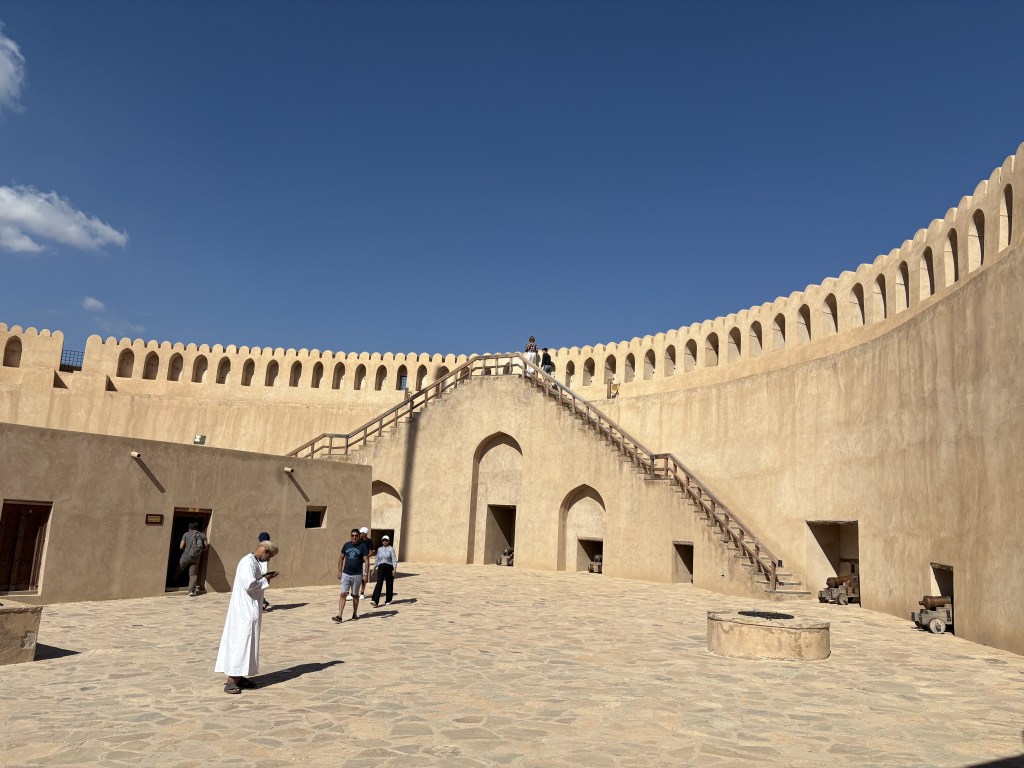
After exploring the fort, we then had a quick lunch and stepped out to walk around explore the rest of Old Nizwa. Walking in the bylanes of the neighborhood indeed feels magical. There are some old houses and some which have been restored, but the entire neighborhood has retained its historical charm and it definitely feels like walking back in time where life is slow. There are some shops serving some artisanal coffee that are nestled in the bylanes and one can just sit and sip coffee while soaking in this town and the whole vibe.
Since this was our last night in Oman and in Nizwa, we again went to explore the Nizwa Souq – however, since it was Friday, most shops at the Souq were closed down. This is one thing to remember if you’re travelling in Oman – generally Fridays are off day for everyone. So you will have to double check if things are open and then visit.
Day 8: Drive back to Muscat and return flight
We then drove back to Muscat and took a return flight home, ending an eventful trip with lots of new experiences to take back home!

 Roamantic Affair