
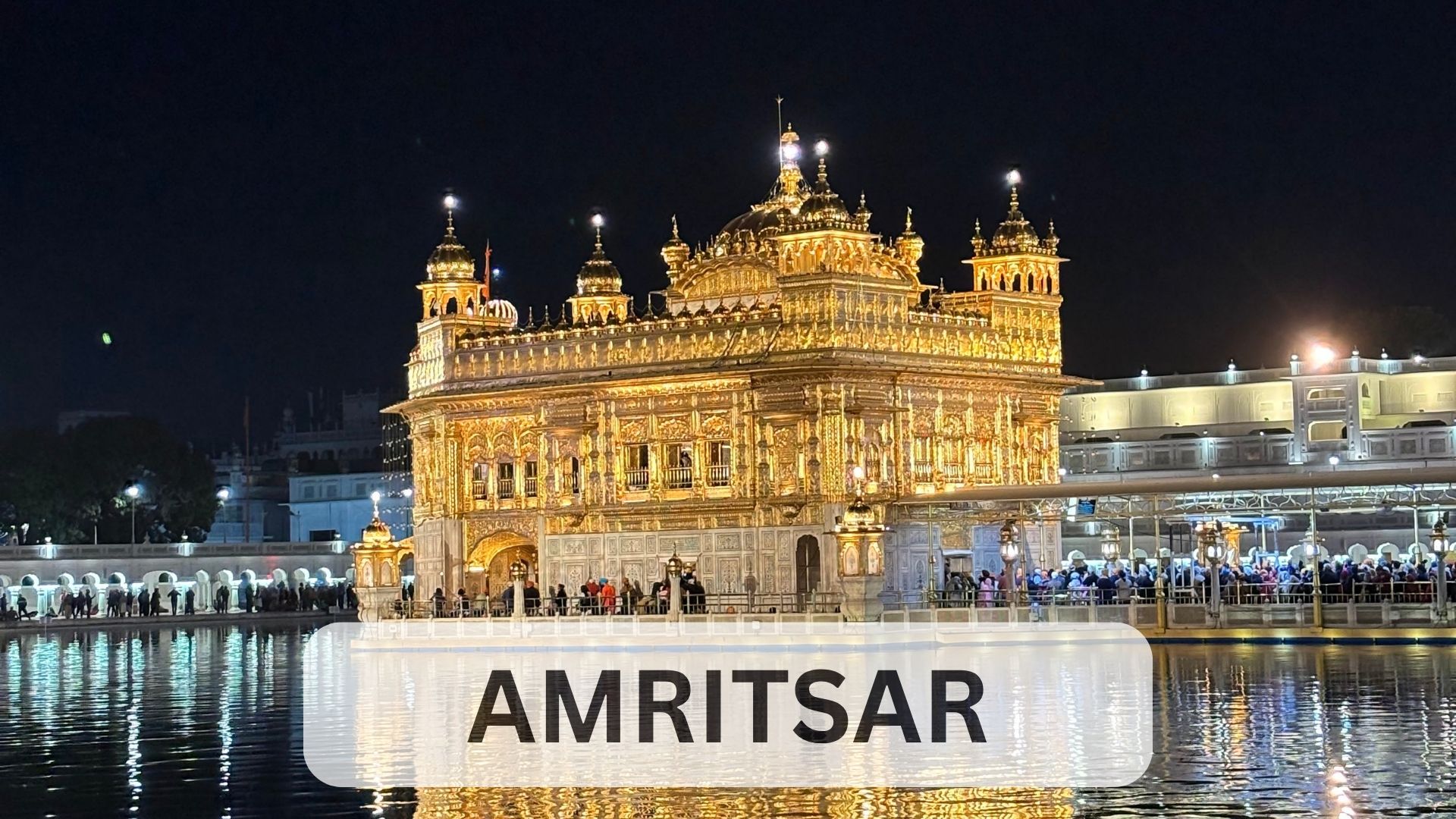
Three days is the ideal length for a first trip to Amritsar – enough time for the Golden Temple (both day and night), Jallianwala Bagh, the Wagah Border ceremony, and a full day for food and shopping, without feeling rushed. Amritsar is India’s most spiritually charged city – home to the iconic Golden Temple, the sobering history of Jallianwala Bagh, the electric Wagah Border ceremony, and some of the country’s best street food. A 3-day trip covers all of it comfortably. Whether you’re drawn by Sikh heritage, Punjabi food, or the sheer energy of the city, this itinerary has you covered – with exact timings, where to eat, and tips that save you hours of waiting in queues.
Sarson ke Khet, Lassi, Kulcha, and Jutti – pretty much all of these are probably no longer adjectives, but synonymous with this historical town. Read on to know more about how to plan your trip, must-do activities, and must-try eateries!
🗓️ High Level Plan
- Day 1: Land in Amritsar, Jallianwala Bagh, Golden Temple at night
- Day 2: Golden Temple Darshan, Wagah Border
- Day 3: Shopping, Gobindgarh Fort, Partition Museum
Round trip from Delhi would cost one around INR 15,000 per couple for a 3 day trip including travel, food and stay.
🍜 Food
- Kesar da Dhaba
- Bhai Kulwant Singh Kulchian Wale
- Gurdass Ram Jalebian Wala
- Big Brother’s Dhaba
📝 Detailed Itinerary
Day 1: Land in Amritsar, Jallianwala Bagh, Golden Temple night visit
Landed in Amritsar and checked in to the Madpackers Amritsar hostel, which is located quite close to the Golden temple.
Freshened up and headed to Jallianwala Bagh which was at a walking distance from the hostel. For those of us who have studied Indian history in the 8th/9th grade, Jallianwala Bagh is a monument which we would all have wanted to visit at least once in our lifetimes. What was a normal park for conducting peaceful events has today turned into a monument which is testament of the horrifying massacre during India’s independence struggle. It will take you around 1 hour to explore all the exhibits and read the history and testimonials put up at various places. We could see the bullet marks on the walls, the well in which people jumped to escape from the shooting and lost lives. Even imagining what could have happened on that day gives one the chills.
We came back to hostel and rested till evening.
We then went to Kesar da Dhaba to have early dinner since this place is known to get quite crowded in the peak times. Thali with shahi paneer, dal makhani was really good. Phirni is a must try!
Around 8 PM, we went to see the Golden Temple in the night. It looked spectacular. We would recommend visiting the Golden Temple at both times – during the day and at night and for the Darshan, night for the views and the calm atmosphere of the Keertans playing in the background and Darshan during the day – preferably reach early in the morning to avoid long waiting time in the queue. The average wait time is however, 2-2.5 hours.


Day 2: Golden Temple in the morning, Attari-Wagah border in the evening
Visited the Golden Temple early in the morning for Darshan. Would recommend to reach as early as 6 AM, else you will have to stand for more than 3 hours in the queue. Post Darshan, we explored the temple area – visited few smaller shrines located within the temple area, had langar which is provided round the clock – simple healthy prasadam, went to the museum dedicated to Sikh gurus and rulers that one can visit.
We walked around the streets outside golden temple for sometime – stopped for breakfast at Bhai Kulwant Singh Kuchian Wale located at a walking distance from the temple. They are one of the oldest establishments and have been serving yummy Kulchas for over 50 years. We then went to Gurdass Ram Jalebian Wala and had freshly prepared hot Jalebis. Went back to hostel and rested a bit.
For lunch, we decided to go to Big Brothers Dhaba and tried the Kulcha Thali there.
At around 1 PM we headed for the Attari-Wagah Border tour. You will need to book tickets online in advance to have a smooth entry process there. We went with a group tour which was organised by the Hostel itself. However, you can book taxis/ Tuk Tuks on your own as well, but you would need to negotiate the price.
Do note that not all vehicles are allowed till the gate, some of them stop near the town of Attari (around 4-5 kms from the actual border gate) and ask you to take a separate tuk-tuk from there. So remember to enquire this when you book the tour.
The drive is also a pretty one with mustard fields lined on both sides of the road. There are also some other landmarks and monuments – India Gate, War Heroes Museum, which one can cover if you start your day a bit early. You will also be able to spot some bunkers once you approach the town of Attari.
No matter how much of a non-believer of patriotism one is, a visit to the Wagah border is good enough to awaken that feeling in you. The fervour, the aggression, the ceremonial theatrics and above all, the atmosphere of the crowd sets the perfect tone for the beating the retreat ceremony.
The actual ceremony starts at 4.15 pm in the evening and goes on for about 45 mins. However, there are some cultural programmes for around 30-45 mins before the start of the ceremony which is also a spectacle in itself. Women spectators are also called upon to dance on the road for sometime to some patriotic music, which again is a great experience.
The entry opens at around 2-2.30 pm, so make sure you reach by then to ensure you get good seats since it is a stadium with a capacity of around 50,000 people and leave 5 mins before the ceremony ends so that you exit the parking before traffic builds up. One point to remember, no belongings except your phone, wallet and water bottle are allowed inside. If you have something, you would have to deposit at the lockers. So it is best not to carry anything.


Day 3: Shopping
We had breakfast again at the Kulwant Singh Dhaba and then headed for shopping. Amritsar is known for its Juttis and Phulkari (a type of embroidery with floral patterns) embroidered dupattas and Salwar suits.
There are 3 major markets where one can shop for salwar materials and Juttis – Hall Bazaar, Katra Jaimal Singh Bazaar and Guru Bazaar. You will get extremely good quality dresses and shoes at near wholesale prices in these markets. Do make sure you have some extra space in your luggage since you will end up buying more than budgeted.
Do not shop at the market near the Golden Temple since the products will be overpriced. The markets only open post 10.30 am. So plan your day accordingly. Came back to the hostel, freshened up, checked out and headed to the airport for our flight back home.
Gobindgarh fort has been recently opened up for tourists which one should visit. Since we did not have the time, we had to skip, however, if you have a spare day, do plan to visit this. Partition museum and Khalsa College (est. 1892, a heritage building) are other place one should plan to visit.


⍰ FAQs
How many days are enough for Amritsar?
3 days covers everything comfortably – Day 1 for Jallianwala Bagh and the Golden Temple at night, Day 2 for Golden Temple Darshan in the morning and the Wagah Border ceremony in the evening, and Day 3 for shopping in the bazaars. If you want to add Gobindgarh Fort and the Partition Museum, keep a buffer on Day 3.
What is the best time to visit the Golden Temple?
Visit twice – once at night for the views and the calm atmosphere of the Keertans playing in the background, and once early morning for Darshan. For Darshan, reach by 6 AM to avoid waiting more than 3 hours in the queue. The average wait time during the day is 2–2.5 hours.
How do you get to the Wagah Border from Amritsar?
Book tickets online in advance for a smooth entry process. You can join a group tour (many hostels including Madpackers organise these) or book a taxi or tuk-tuk independently – just negotiate the price beforehand. Note that not all vehicles are allowed all the way to the border gate; some stop near the town of Attari, about 4–5 km away, and you’ll need a separate tuk-tuk from there. Confirm this when booking.
What time does the Wagah Border ceremony start and when should you arrive?
The beating retreat ceremony starts at 4:15 PM and lasts about 45 minutes. There are cultural programmes for 30–45 minutes before that, including women spectators being invited to dance on the road to patriotic music. Entry opens at 2–2:30 PM and the stadium holds around 50,000 people, so arrive early for good seats. Leave about 5 minutes before the ceremony ends to beat the parking traffic. Only your phone, wallet, and water bottle are allowed inside – no bags or belongings.
Where should you eat in Amritsar?
Four places you shouldn’t miss: Kesar da Dhaba for the thali – the shahi paneer, dal makhani, and especially the phirni are exceptional, but go early as it gets very crowded. Bhai Kulwant Singh Kulchian Wale near the Golden Temple for kulchas – one of the oldest establishments in the city, serving kulchas for over 50 years. Gurdass Ram Jalebian Wala for freshly prepared hot jalebis. Big Brothers Dhaba for the kulcha thali at lunch. Avoid eating at the market stalls right outside the Golden Temple – the food there is overpriced.
What should you buy in Amritsar and where?
Amritsar is known for its Juttis (traditional footwear) and Phulkari embroidered dupattas and salwar suits. The three best markets are Hall Bazaar, Katra Jaimal Singh Bazaar, and Guru Bazaar – all offer excellent quality at near-wholesale prices. The markets open only after 10:30 AM so plan accordingly. Keep extra luggage space – you will end up buying more than planned.
What is the budget for a 3-day Amritsar trip?
A round trip from Delhi costs around ₹15,000 per couple for 3 days, covering travel, food, and stay. Amritsar is generally an affordable city – the street food is cheap, the langar at the Golden Temple is free, and budget hostel options like Madpackers are well-located close to the main sights.
What are the must-visit places in Amritsar beyond the Golden Temple?
Jallianwala Bagh is essential – set aside at least an hour to read the history, see the bullet marks on the walls, and visit the well. The Wagah Border ceremony is unmissable for the sheer atmosphere and patriotic fervour. Gobindgarh Fort has recently opened to tourists and is worth a visit if you have time. The Partition Museum and Khalsa College (established in 1892, a stunning heritage building) are also worth adding if you have a spare half day.
What are the best Sikh heritage sites in Amritsar beyond the Golden Temple?
The Golden Temple complex itself holds more than most visitors realize – the Akal Takht (the seat of Sikh temporal authority, right across from the main shrine) and the Central Sikh Museum (upstairs in the main entrance, covering Sikh history and the Gurus) are both easy to fold into the same visit and often missed. If you have a spare half-day, Anandpur Sahib – around 2.5 hours from Amritsar – is where the Khalsa was founded and is a natural extension for anyone specifically building a Sikh heritage-focused trip, though it’s a stretch for a strict 3-day itinerary.
What is the best time to visit Amritsar?
October to March, when the weather is pleasant enough for a full day of walking between the Golden Temple, Jallianwala Bagh, and the markets. Winters (December–January) can get cold in the early morning, so plan the Golden Temple sunrise visit with that in mind. Avoid April to June if you can – daytime heat makes the Wagah Border wait and the old-city walking tough. Diwali is a particularly special (but crowded) time to visit, since the Golden Temple is lit up for the occasion.

Leave a Reply